
I’ve decided to put my Travel bucket list of places I would like to visit and mark the ones I’ve already visited in this list.
Table of Contents
If you would like to Donate to make those trips to happen and to be documented here please do so via donating here.
New Seven Wonders of the World
Great Wall of China
The Great Wall of China, one of the world’s largest construction projects, is believed to be about 5,500 miles (8,850 km) long, though a disputed study claims 13,170 miles (21,200 km). Construction began in the 7th century BCE and continued for two millennia. The structure includes lengthy stretches of two parallel walls, watchtowers, and barracks. Despite being built to prevent invasions, the wall largely failed to provide security, serving more as “political propaganda.” It is UNESCO World Heritage Site.
Visited in 2009 as part of a backpacking trip in China, but would love to see the other parts of the wall, especially the one that goes under the water.
Colosseum, Italy
Built in the first century by Emperor Vespasian, Rome’s Colosseum was an engineering marvel, holding up to 50,000 spectators. This vast amphitheater staged diverse events, most famously gladiatorial combats and fights between men and animals. Mock naval battles were even held by flooding the arena. While the martyrdom of Christians there is debated, the Colosseum witnessed immense bloodshed, with estimates of around 500,000 human deaths and the potential extinction of some animal species due to the sheer numbers killed. It is a UNESCO World Heritage Site.
By now I’ve visited it 4 times already: 2011, 2018, 2022 and 2024, just because I love Rome and as they say: “All roads lead to Rome”.
Taj Mahal, India
India’s Taj Mahal in Agra, a stunning example of Mughal architecture, was built by Emperor Shah Jahan in memory of his wife Mumtaz Mahal, who died in 1631. This iconic mausoleum complex, featuring a vast garden and reflecting pool, took about 22 years and 20,000 workers to complete. Crafted from white marble inlaid with semiprecious stones in intricate designs, its central dome is flanked by four smaller ones. Legend says Shah Jahan planned a black marble mausoleum for himself, but he was overthrown before its construction began. It is a UNESCO World Heritage Site.
I visited it in 2016 and in 2022.
Petra, Jordan
The ancient city of Petra, Jordan, is located in a remote valley among sandstone mountains and cliffs, and was purported to be one of the places where Moses struck a rock and water gushed forth. The Nabataeans, an Arab tribe, made it their capital, and it flourished as a major trade centre, especially for spices. Noted carvers, the Nabataeans chiseled dwellings, temples, and tombs into the sandstone, and constructed a water system for lush gardens and farming. At its height, Petra reportedly had a population of 30,000. The city declined as trade routes shifted, and major earthquakes in 363 CE and 551 CE led to its gradual abandonment. Although rediscovered in 1912, Petra was largely ignored by archaeologists until the late 20th century, and many questions remain about the city. It is a UNESCO World Heritage Site.
Machu Picchu, Peru
This Incan site near Cuzco, Peru, was “discovered” in 1911 by Hiram Bingham, who believed it was Vilcabamba, a secret Incan stronghold used during the 16th-century rebellion against Spanish rule. Although that claim was later disproved, the purpose of Machu Picchu has confounded scholars. Bingham believed it was home to the “Virgins of the Sun,” women who lived in convents under a vow of chastity. Others think that it was likely a pilgrimage site, while some believe it was a royal retreat. (In 2000 a crane being used for a beer commercial fell and cracked a monument.) What is known is that Machu Picchu is one of the few major pre-Columbian ruins found nearly intact. Despite its relative isolation high in the Andes Mountains, it features agricultural terraces, plazas, residential areas, and temples. It is a UNESCO World Heritage Site.
I finally did it in October 2024 after a decade thinking about it!
Chichén Itzá, Mexico
Chichén Itzá, a Mayan city on Mexico’s Yucatán Peninsula, flourished in the 9th and 10th centuries CE. Under the Itzá, influenced by the Toltecs, significant monuments and temples were built. Notably, the stepped pyramid El Castillo (“The Castle”), rising 79 feet (24 metres) above the Main Plaza, has 365 steps, mirroring the solar year, and during the equinoxes, displays a serpent shadow descending its north stairway. It is a UNESCO World Heritage Site.

Christ the Redeemer, Rio de Janeiro, Brazil
Rio de Janeiro’s iconic Christ the Redeemer statue atop Mount Corcovado was conceived post-World War I by Brazilians concerned about secularism. Designed by Heitor da Silva Costa, Carlos Oswald, and Paul Landowski, its construction spanned 1926-1931. This colossal Art Deco sculpture, the world’s largest, stands 98 feet tall with a 92-foot arm span (excluding its 26-foot base). Crafted from reinforced concrete covered in roughly six million tiles, the statue has frequently been hit by lightning, even damaging its thumb in 2014.

Antarctica
The most common and generally considered cheapest and easiest place to take a boat to visit Antarctica is Ushuaia, Argentina. I saw some options for £3.7k p.p., but not sure how reliable they are.


The best time to visit Antarctica is during the austral summer, from November to March, with each part of the season offering distinct advantages. November, the early season, presents a pristine, snow-covered landscape with dramatic ice formations and the beginning of penguin and seal courtship rituals, often with fewer visitors. The peak season in December and January boasts the longest daylight hours and mildest temperatures, coinciding with the hatching and early growth of adorable penguin chicks and increasing whale activity. As the season draws to a close in February and March, whale sightings are generally at their peak, penguin chicks are fledging, and the receding ice allows for exploration of more southerly areas, often with the added benefit of fewer crowds and stunning autumnal light, making the ideal time to visit dependent on whether your priority is untouched landscapes, peak breeding activity, or prime whale watching opportunities.
Visiting Antarctica offers an unparalleled opportunity to experience a truly wild and pristine continent, a place of immense natural beauty and unique ecosystems unlike anywhere else on Earth. It’s a chance to witness dramatic landscapes of towering icebergs, vast glaciers, and snow-covered mountains under incredible polar light. The abundant and often unafraid wildlife is a major highlight, with opportunities to see various species of penguins waddling and porpoising, seals lounging on ice floes, and whales breaching in the frigid waters – a truly immersive wildlife viewing experience. Furthermore, traveling to Antarctica provides a profound sense of being at the edge of the world, following in the footsteps of legendary explorers and gaining a unique perspective on the planet’s fragile environment and the impacts of climate change.

Argentina
Bariloche and Lake Nahuel Huapi
Nestled in an Andean valley on the shores of Lake Nahuel Huapi, Bariloche stands as the foremost tourist destination in Argentine Patagonia, renowned for its stunning scenery of temperate forests and pristine lakes. The nearby Seven Lakes district, connected by a road between Villa la Angostura and San Martín de los Andes, is a popular camping spot and an iconic experience for Argentines. Bariloche is also home to Cerro Catedral, South America’s largest winter sports resort, offering extensive trails and scenic views. Beyond outdoor activities, the city is celebrated for having the world’s best chocolate. A recommended short excursion is driving or taking a bus along the Seven Lakes Scenic Road for breathtaking views of Andean lakes.

Parque Nacional Los Glaciares and Perito Moreno Glacier
Parque Nacional Los Glaciares and its star attraction, the Perito Moreno Glacier, offer a truly compelling travel experience in Argentine Patagonia. Visiting provides a rare opportunity to witness a massive, actively advancing glacier, a phenomenon not commonly seen worldwide. The dramatic calving of enormous ice chunks from the Perito Moreno’s face into Lago Argentino creates a stunning and thunderous spectacle observable from well-placed walkways and boat tours. Beyond this iconic glacier, the park encompasses a vast wilderness of rugged mountains, including the renowned Fitz Roy and Cerro Torre peaks, and numerous pristine glacial lakes. This breathtaking landscape is a haven for nature enthusiasts, hikers, and photographers, showcasing the immense power and beauty of ongoing geological processes and supporting diverse Patagonian wildlife.
To reach this remarkable region, the primary gateway is the town of El Calafate in Argentina, served by an airport with flights from major cities like Buenos Aires. From El Calafate, the Perito Moreno Glacier is easily accessible via a paved road, with options including regular bus services, rental cars for flexibility, or guided tours and private transfers. For those interested in the park’s northern section, known for its exceptional trekking routes around Fitz Roy, the town of El Chaltén serves as the main base, connected to El Calafate by bus and road. Entry to Parque Nacional Los Glaciares requires an admission fee. Visitors should also consider the season, as winter conditions can impact accessibility and available activities.

El Calafate
El Calafate serves as the essential hub for exploring the southern sector of Parque Nacional Los Glaciares, most notably providing the primary access point to the stunning Perito Moreno Glacier. Situated on the shores of the immense Lake Argentino, the town offers visitors a range of accommodations, restaurants, and tour operators, making it the ideal base for experiencing the glacier’s dramatic ice calving and navigating the breathtaking landscapes of the surrounding national park.
You can get to El Calafate by flying into its international airport (FTE). There are direct flights available from several major cities in Argentina, including Buenos Aires.

El Chaltén
Located in the Santa Cruz province of Patagonia, the small town of El Chaltén is recognized as one of the world’s top trekking destinations. Situated near the striking Fitz Roy mountain and within Parque Nacional Los Glaciares, it offers unparalleled views and extensive hiking opportunities. The same vast national park, accessible via the nearby city of El Calafate, is home to the iconic Perito Moreno Glacier. This massive ice formation, measuring 30km long, 5km wide, and 60m high, is famous for the dramatic ice calvings that occur in the summer near its viewing platform. When planning a visit, it is advisable to avoid the winter months due to potential trail closures and harsh weather; packing a windbreaker is recommended for any season. Must see: Mirador Río de las Vueltas.

Iguazú Falls
Located at the tri-border area of Argentina, Brazil, and Paraguay, the Iguazú region is home to the world’s most impressive network of waterfalls, the Iguazú Falls. Set within a dense rainforest, these falls were recognized as one of the seven “Natural Wonders of the World” in 2011 and designated a UNESCO World Heritage Site in 1984. Accessible from both Argentina and Brazil, a highlight is the Garganta del Diablo (Devil’s Throat), the dramatic centerpiece of the falls, with the Argentine viewing platform offering a superior vantage point despite the chute being technically in Brazil. While many attractions are on the Brazilian side, crossing the land border is generally easy, though bringing your passport is essential for this often-frequented crossing.

Quebrada de Humahuaca and Salinas Grandes, Jujuy
The Andes in Northwestern Argentina’s Jujuy province present breathtaking landscapes comparable to Patagonia. The region encompasses the Quebrada de Humahuaca, offering unforgettable sights such as grazing guanacos and mountains displaying striking color variations, from near white to deep purple. The Hornocal mountain range exhibits almost psychedelic hues, and the Salinas Grandes are among the world’s largest salt flats, collectively challenging perceptions of nature’s scale and color. Historically, the area holds some of the earliest evidence of human habitation in the Southern Cone and was part of the Southern Inca empire, contributing to a rich indigenous cultural legacy maintained by the Kolla, Atacama, Quechua, and Omaguaca peoples. The local cuisine is notable, featuring ancestral dishes like Humita en Chala and tamales. Llama meat is a regional delicacy often prepared as salami. The town of Tilcara is home to El Nuevo Progreso, an award-winning restaurant that elevates traditional dishes using avant-garde techniques. Visitors should be aware of the high altitude, with the Humahuaca Valley exceeding 3000m and some attractions reaching over 4350m. Remedies for low oxygen, such as coca leaf candies, are widely available.

Bolivia
Bolivia provides some of the most dramatic landscapes and rich cultural experiences in South America, spanning from the high-altitude peaks of the Andes to the dense wilderness of the Amazon basin. A list of must-see destinations has been compiled below to help guide the planning of an unforgettable journey.
Salar de Uyuni
This destination represents the largest salt flat in the world, covering over 10,000 square kilometres of the high-altitude Altiplano. The vast expanse was formed by prehistoric lakes that dried up millennia ago, leaving behind a thick crust of pristine white salt that stretches out to the horizon. During the dry season, the landscape forms a cracked, hexagonal pattern that challenges perspective and provides incredible opportunities for photography. In contrast, the rainy season between January and March transforms the entire surface into a shallow, colossal mirror reflecting the sky, creating the surreal illusion of walking among the clouds.

La Paz
As the highest administrative capital in the world, the city sits within a spectacular bowl-shaped canyon surrounded by the snow-capped triple peaks of Mount Illimani. The urban layout is uniquely experienced via Mi Teleférico, a extensive network of cable cars that serves as the primary public transit system and offers breathtaking aerial views of the metropolis. Visitors can easily explore the historic, cobblestone streets of Calle Jaén, navigate the bustling alleyways of the Witches’ Market to view traditional Aymara remedies, and observe the fascinating contrast between ancient indigenous traditions and rapid modern development.

Lake Titicaca and Isla del Sol
Straddling the border between Peru and Bolivia, this body of water is recognised as the highest navigable lake on Earth, situated at over 3,800 metres above sea level. The peaceful lakeside town of Copacabana serves as the main gateway to Isla del Sol, an island steeped in Inca mythology as the legendary birthplace of the Sun God, Viracocha. Exploring the island reveals ancient stone ruins, agricultural terraces, and traditional Aymara villages where life moves at a beautifully slow pace. Furthermore, the deep blue waters contrasted against the distant, jagged peaks of the Cordillera Real offer a profoundly spiritual and tranquil atmosphere.

Sucre
Known universally as the “White City” due to its remarkably well-preserved colonial architecture, the constitutional capital of Bolivia is a designated UNESCO World Heritage Site. The city features pristine, whitewashed buildings, lovely orange-tiled roofs, and leafy plazas that create a distinctly Mediterranean ambiance. Visitors frequently enjoy climbing to the rooftop of the Templo de San Felipe Neri for panoramic viewpoints, or taking a short journey outside the city to Parque Cretácico to view thousands of authentic dinosaur footprints preserved on a massive cliffside. Consequently, the mild climate and relaxed pace make it a favourite destination for travellers seeking to immerse themselves in history.

Madidi National Park
For those seeking an immersive wildlife adventure, this immense protected reserve stretches from the snow-capped Andes down into the lush Amazon river basin. It is widely considered one of the most biodiverse places on the entire planet, protecting thousands of unique species of birds, mammals, and plants within its borders. Base towns like Rurrenabaque allow adventurers to embark on river safaris to spot pink river dolphins, jaguars, caimans, and diverse monkey species in their natural habitats. Therefore, it serves as the ultimate frontier for ecotourism and presents a stark, tropical contrast to the chilly heights of the Bolivian highlands.


China
Yangshuo
Yangshuo, located in southern China’s Guangxi region, offers an exceptionally diverse range of outdoor, cultural, and leisure activities. Travellers can embark on relaxing bamboo raft rides down the Yulong River, take multi-hour scenic cruises along the Li River, or observe traditional evening cormorant fishing on the water. Furthermore, land-based exploration flourishes through cycling or riding e-scooters along the Ten-Mile Gallery, as well as hiking up Moon Hill, Laozhai Mountain, or Xianggong Hill for panoramic summit views. Thrill-seekers frequently engage in world-class rock climbing on the limestone cliffs or venture inside subterranean caverns like the Water Cave for mud baths and swimming. In addition, cultural pursuits include picking tea leaves at the Qixianfeng Tea Plantation, taking traditional Chinese cooking, language, or Tai Chi classes, and attending the massive Impression Sanjie Liu night show set on the river. Finally, visitors can enjoy socialising, shopping, and sampling local specialities such as beer fish along the bustling, historic West Street.

Forbidden City, Beijing
The Forbidden City, situated in the heart of Beijing, stands as an indispensable destination because it offers an unmatched journey into China’s imperial history. Specifically, serving as the royal palace for 24 emperors across the Ming and Qing dynasties, this massive complex showcases the absolute pinnacle of traditional Chinese architecture with its golden roof tiles, vermilion walls, and perfectly symmetrical central axis. Furthermore, exploring the vast ceremonial courtyards, such as the Hall of Supreme Harmony, allows visitors to marvel at ancient engineering feats that have withstood centuries of earthquakes and fires. In addition, stepping into the intimate Inner Court and the serene Imperial Garden grants a fascinating glimpse into the daily lives, court secrets, and artistic patronage of ancient rulers. Now housing the Palace Museum’s extensive collection of priceless imperial treasures, ceramics, and jade, the site ultimately provides a profound connection to the cultural soul of China.
The Museum of Qin Terracotta Warriors and the Emperor’s Mausoleum, Xi’an
The Museum of Qin Terracotta Warriors and the Emperor’s Mausoleum, located near Xi’an, serves as one of the world’s most extraordinary archaeological sites because it provides a monumental window into China’s ancient military might and imperial ambition. Specifically, constructed to guard China’s first emperor, Qin Shi Huang, in the afterlife, the site features thousands of life-sized, individualised terracotta soldiers, horses, and chariots arranged in precise battle formations across vast subterranean pits. Furthermore, examining these astonishing statues up close reveals intricate details, ranging from unique facial expressions and hairstyles to detailed armor plates that highlight the exceptional craft skill of ancient artisans. In addition, visiting the nearby Emperor’s Mausoleum mound and viewing the exquisite bronze chariots on display yields deep insights into the grand rituals, advanced metallurgy, and political unification of the Qin Dynasty. Housing one of the greatest treasures of human history, this UNESCO World Heritage Site ultimately delivers an unforgettable encounter with the origins of unified China.

Guilin
Guilin, situated along the tranquil Li River in southern China, stands as an essential destination because its surreal landscapes have inspired classical Chinese painters and poets for centuries. Specifically, the city serves as the ultimate gateway to towering, emerald-green karst mountains that rise dramatically out of flat urban plains and countryside. Furthermore, exploring iconic urban landmarks like Elephant Trunk Hill or navigating the illuminated subterranean formations of the 180-million-year-old Reed Flute Cave offers immediate immersion into the region’s natural wonder. In addition, taking a scenic downriver cruise toward Yangshuo reveals a peaceful rural panorama where water buffalo graze and traditional cormorant fishermen navigate the waters on narrow rafts. Combining ancient imperial monuments, vibrant street markets, and breathtaking geological formations, this picturesque region ultimately provides one of the most quintessential landscape experiences in all of Asia.

Yunhe Rice Terraces, Zhejiang
The Yunhe Rice Terraces, situated in Lishui within Zhejiang province, represent China’s largest terraced field system and serve as an extraordinary destination for travellers seeking serene, high-altitude landscapes. Specifically, carved into mountain slopes over a thousand years ago during the Tang Dynasty, the terraces cascade down up to 700 distinct layers spanning altitudes from 200 to 1,400 meters. Furthermore, visiting the area during early morning hours allows tourists to witness the famous “sea of clouds” phenomenon, where thick mountain mist rolls over water-filled or golden paddies to create a ethereal, dreamlike scene. In addition, exploring quaint mountain hamlets like Kenggen Village offers visitors a unique chance to experience the traditional agrarian lifestyle, architecture, and folk customs of the local She ethnic minority. Combining breathtaking photography opportunities with rich cultural heritage, this 5 star scenic area ultimately provides a remarkably peaceful escape into China’s rural highlands.

The Longsheng Rice Terraces
The Longsheng Rice Terraces, also known as the Longji or “Dragon’s Backbone” Terraces, are situated in Guangxi province and offer travellers a mesmerising fusion of ancient agricultural design and vibrant minority culture. Specifically, first constructed during the Yuan Dynasty and expanded over centuries, these sweeping mountainside fields resemble giant dragon scales as they wind around steep ridges from riverbanks up to cloud-shrouded summits. Furthermore, exploring traditional wooden stilt villages, such as Ping’an or Dazhai, grants visitors a rare opportunity to experience the unique customs, embroidery, and cuisine of the local Zhuang and Red Yao ethnic groups. In addition, hiking along the stone pathways between high viewpoints yields breathtaking, ever-changing panoramas that shift dramatically with the seasons, from mirror-like flooded paddies in spring to shimmering gold fields in autumn. This iconic destination ultimately provides an unforgettable journey into one of China’s most celebrated cultural landscapes.
Huangshan (Yellow Mountain), Anhui
Huangshan, or the Yellow Mountain, located in Anhui province, represents an unmissable destination because it embodies the legendary landscape depicted in classic Chinese ink paintings. Specifically, this UNESCO World Heritage Site is celebrated worldwide for its “Four Wonders,” which include peculiar granite peaks, ancient contorted pines growing directly out of rock crevices, hot springs, and the mystical “Sea of Clouds” mist rolling through deep valleys. Furthermore, ascending the mountain via scenic trails or cable cars allows travellers to explore dramatic locations like the West Sea Grand Canyon and witness breathtaking, unforgettable sunrises from peaks exceeding 1,800 metres. In addition, visiting nearby historical Huizhou villages, such as the UNESCO-listed Hongcun and Xidi at the base of the mountain, offers a delightful glimpse into traditional whitewashed architecture and peaceful rural life. Celebrated by poets and painters for millennia, this majestic mountain range ultimately delivers one of the most awe-inspiring nature experiences in China.

Zhangiiajie mountains, Hunan
Zhangjiajie mountains, located in the Hunan province of China, are a breathtaking natural wonder that has captivated visitors from around the world. Renowned for their towering quartzite sandstone pillars, the mountains offer a surreal and ethereal landscape that seems straight out of a fairytale. The picturesque beauty of Zhangjiajie was further popularized by its inclusion in the movie “Avatar,” which showcased the stunning floating mountains. The area is part of the larger Wulingyuan Scenic Area, a UNESCO World Heritage Site, and offers a variety of attractions such as the glass-bottomed Zhangjiajie Grand Canyon Bridge and the Tianmen Mountain with its thrilling cliff-hanging glass skywalk.

Zhangye National Geopark, Gansu
The Zhangye National Geopark, situated in Gansu province along China’s ancient Silk Road, stands as an unmissable geological marvel due to its extraordinarily vibrant “Rainbow Mountains”. Specifically, created over millions of years through the erosion of sandstone and mineral deposits, the massive hills display striking, multi-coloured stripes of red, orange, yellow, and green that look virtually hand-painted. Furthermore, navigating the park via hop-on, hop-off shuttle buses and well-maintained boardwalks allows visitors to easily reach elevated viewing platforms for breathtaking panoramic photography. In addition, witnessing these rolling landforms during sunrise or sunset, or shortly after rain, intensifies the hues and creates an otherworldly, surreal landscape. Recognised as a UNESCO Global Geopark, this awe-inspiring destination ultimately offers one of the most visually unique natural experiences in all of Asia.

Mingsha Mountain and Crescent Lake, Dunhuang
Mingsha Mountain and Crescent Lake, situated near Dunhuang in Gansu province along the ancient Silk Road, offers an unmissable desert oasis experience where towering sand dunes encircle a natural spring. Specifically, named for the echoing sound produced when wind sweeps across the dunes, Mingsha Shan (Singing Sand Mountain) provides visitors with engaging activities like camel riding, sand sliding, and hiking up sandy ridges for dramatic views. Furthermore, nestled at the base of these golden slopes lies Crescent Lake (Yueyaquan), a spring-fed oasis that has remarkably survived amidst shifting sands for thousands of years. In addition, admiring the contrast between the traditional Han-style pagoda, lush greenery, and vast desert expanse during sunset creates an extraordinary landscape. Combining natural desert wonders with deep Silk Road history, this iconic destination ultimately delivers a surreal escape into China’s northwestern wilderness.

Any other recommended places in China? Please leave them in the comments section!
Colombia
Lost City Trekking (Camino a Ciudad Perdida), Colombia
Okay, so I’m seriously considering this Lost City Trek in Colombia. I keep hearing it’s an incredible experience, and honestly, I’m itching for an adventure.
From what I’ve gathered, it’s not just a walk in the park. We’re talking about a 4 to 6-day trek and 48km, deep into the Sierra Nevada de Santa Marta mountains. The destination? Ciudad Perdida – the Lost City. Apparently, it was the capital of the Tayrona civilization, and get this, it’s even older than Machu Picchu!
I know I’d be hiking through some pretty intense terrain. Think lush jungles, river crossings, and steep climbs. And the heat and humidity? I’ve heard it can be brutal. But the thought of reaching that ancient city, climbing those 1,200 stone steps… that’s a huge motivator.
What really intrigues me, though, is the cultural aspect. I’d get to meet and learn about the indigenous communities – descendants of the Tayrona people like the Kogi, Wiwa, Arhuaco, and Kankuamo. To witness their way of life and learn about their history… that would be amazing.
Logistically, it seems like most people start near Santa Marta, and the tours handle everything – meals, accommodation in campsites or lodges, and guides. I’d definitely need a good level of fitness, and I’d have to pack smart: light clothing, insect repellent, sunscreen, and sturdy hiking boots are a must.

Cocora Valley – Acaime (House of the Hummingbird)
I’ve been also looking into visiting Cocora Valley and Acaime in Colombia, and it sounds absolutely incredible.
Cocora Valley itself is famous for these towering wax palm trees, Colombia’s national tree. Just imagining the landscape filled with these giants is breathtaking. I’d love to hike through that scenery.
And then there are hummingbirds. Apparently, it’s a sanctuary where you can see multiple species of hummingbirds up close. That’s a total must-do for me – I can already picture myself surrounded by these tiny, colourful birds. There are other spectacular treks in Colombia.

Ecuador
Galápagos Islands, Ecuadorguate
The Galápagos Islands is my dream destination as an animal lover. This isolated archipelago, located off the coast of Ecuador, is home to a remarkable array of unique and fearless wildlife. Here, you can encounter giant tortoises roaming freely, swim alongside playful sea lions, and observe blue-footed boobies performing their comical mating dances. The islands’ remote location and volcanic landscape have allowed these species to evolve in ways found nowhere else on Earth, resulting in an unparalleled opportunity for close encounters with extraordinary creatures.
The lack of natural predators has made the animals of the Galápagos exceptionally tame, allowing for intimate and unforgettable experiences. You can snorkel with marine iguanas as they graze on underwater algae, watch penguins waddle along the shore, and witness Darwin’s finches, which played a key role in his theory of evolution. Every island offers a unique chance to witness different species. I can only imagine how many pictures I would take in there.
Tortuga Bay Beach near Bellavista in Santa Cruz island is not to be missed too.

Ingapirca and the Inca Trail, Ecuador
The Ecuadorian Inca Trail, a 3-day, 40-kilometer hike of moderate-to-difficult intensity, offers a worthwhile alternative to the Peruvian path to Machu Picchu. Despite the destruction of much of the original route by Spanish conquistadors, the trail reaches a maximum elevation of 4,200 meters, matching the highest point on the Peruvian section, and features the impressive Temple of the Sun at Ingapirca, sweeping through cloud-height peaks with canyon, lagoon, and mountain views. A guided tour provides insights into Inca history and later Indigenous struggles for independence.

Volcano Cotopaxi hike
Volcán Cotopaxi, Ecuador’s second-highest peak (5897 meters) and one of the world’s highest active volcanoes, offers a challenging guided climb for motivated hikers. For those preferring lower elevations, Parque Nacional Cotopaxi’s 33586.64-hectare trails provide a sanctuary with the volcano as a backdrop. The flat Lake Limpiopungo trail suits all fitness levels, offering abundant wildlife sightings, including white-tailed deer, Andean fox, soaring condors, and the occasional spectacled bear. Visitors can also enjoy horseback riding and guided treks from traditional haciendas to explore the park’s flora, fauna, and geology.

Condor Trek, Ecuador
The Trek of the Condor, a 5-day, 50.5-kilometer journey renowned as one of Ecuador’s best treks and a National Geographic bucket list adventure, is a challenging but accessible high-altitude (over 3,000 meters) route through Indigenous pueblos and páramo grasslands. Starting near Papallacta, where trekkers can prepare in outdoor thermal pools, the trail demands acclimatization and fitness but rewards with stunning scenery and wildlife encounters.


Lake Cuicocha hike
f you’re headed to Otavalo, Lake Cuicocha is an easy add-on day hike. This flooded, extinct volcano is surrounded by vegetation, making for a beautiful four- or five-hour walk around the rim of around 12km. Two small lava islands resemble guinea pigs, from which the lake gets its Kichwa name. Since Cuicocha Lake is one of the lesser-known caldera hikes in Ecuador, you’ll encounter fewer people on the trail. The Otavalo area also offers the 18 meter Peguche waterfalls, easily reached by foot or bike. An Indigenous water-purification ceremony takes place here during Inti Raymi in June.

Mount Chimborazo Trek, Ecuador
South of Riobamba, Chimborazo, Ecuador’s highest peak (6309 meters) is a majestic sight. The Devil’s Nose railway offers a marvel of engineering, switchbacking down the Andes with early train views of Chimborazo. Fit and acclimatised travellers can attempt a challenging ascent of Chimborazo with a certified guide, requiring crampons and serious gear, and an overnight stay at a high-altitude refuge. For those preferring lower elevations, Reserva de Producción de Fauna Chimborazo offers trails for day-trekkers and mountain bikers, with opportunities to see vicuña, llama, and alpaca. Nearby, views of Altar and Tungurahua volcanoes, Parque Nacional Sangay, and Colta Lagoon provide further exploration, with the lagoon offering beautiful reflections of Chimborazo. It is difficult 2-3 day hike covering 38.4km (~24 miles).

Quilotoa crater hike, Ecuador
The scenic Quilotoa crater, one of Ecuador’s most beautiful locations, can be trekked. The longer Quilotoa Loop takes up to five days (40km, moderate to difficult), allowing for a real dive into local villages and highland culture, where you can pick up phrases in the local Kichwa language as you pass by villages and rainforest vegetation. A number of markets take place on the loop, from Zumbahua on Saturday to Saquisilí on Thursday. Indigenous markets are one of the highlights of any visit to the Ecuadorian Andes. Everything is accessible with local transport.

Iran
Also plases to visit Hormuz, Yazd, Isfahan city, Urmia Lake, Piran and Sultan Amir Ahmad Bathhouse.
Persepolis
Persepolis, meaning “the Persian city” in Greek, was the ceremonial capital of the Achaemenid Empire, founded by Darius I around 518 BCE in what is now Fars Province, Iran. This UNESCO World Heritage site stands as a monumental testament to the power, wealth, and sophisticated artistry of ancient Persia.
Built on an immense, partially artificial terrace, its ruins showcase grand palaces like the Apadana and the Throne Hall, elaborate gateways such as the Gate of All Nations, and intricate bas-reliefs depicting delegations from across the vast empire bringing tribute. Though largely destroyed by Alexander the Great in 330 BCE, Persepolis remains a crucial archaeological site offering profound insights into the Achaemenid dynasty’s architecture, administration, and imperial ideology.

Gran Canyon of Middle-east – Chahkooh Canyon
Chahkooh Canyon is a remarkable geological attraction located on Qeshm Island in Iran, renowned for its deeply eroded sedimentary rock formations that create a surreal, almost otherworldly landscape. This 100-meter-deep canyon features narrow passages, intricate grooves, and various holes and forms carved by centuries of wind and rainwater, making it a key part of the Qeshm UNESCO Global Geopark. Its name, “Chahkooh,” meaning “mountain well,” refers to the ancient wells dug by locals within the canyon, which historically served as crucial freshwater sources in the arid region.

Lut Desert (Dasht-e Lut)
The Lut Desert (Dasht-e Lut), located in southeastern Iran, is a vast and hyper-arid expanse recognized as a UNESCO World Heritage site and renowned for its extreme geological features. It is famously known as one of the hottest places on Earth, with satellite measurements recording surface temperatures as high as 70.7°C (159.3°F) in 2005.
This harsh environment has sculpted extraordinary landforms, including some of the world’s best examples of yardangs—massive, corrugated ridges carved by centuries of strong winds and sandblasting—some reaching up to 155 meters in height and stretching for over 40 kilometers. The desert also boasts extensive sand seas with some of the tallest sand dunes globally, reaching heights of up to 475 meters, alongside unique salt pans and stony deserts. Despite its extreme conditions, the Lut Desert presents a visually stunning and unique landscape that attracts adventurers and researchers alike.

Bam Citadel (Arg-e Bam)
The Bam Citadel (Arg-e Bam), located in the city of Bam in southeastern Iran, is the largest adobe (mud-brick) building in the world and a UNESCO World Heritage site. Its origins date back to at least the Achaemenid Empire (6th to 4th centuries BCE), and it flourished particularly between the 7th and 11th centuries CE as a vital crossroads along the Silk Road, known for its textile production.
This massive fortified city once encompassed a complete urban complex, including living quarters, military barracks, a bazaar, a mosque, and the governor’s residence, all constructed entirely from earthen materials. Tragically, the citadel was almost entirely destroyed in a devastating 6.6 magnitude earthquake on December 26, 2003, which also claimed tens of thousands of lives in the surrounding city of Bam. Since then, significant international and national efforts have been underway to conserve and rebuild this extraordinary historical monument, slowly restoring its former grandeur.

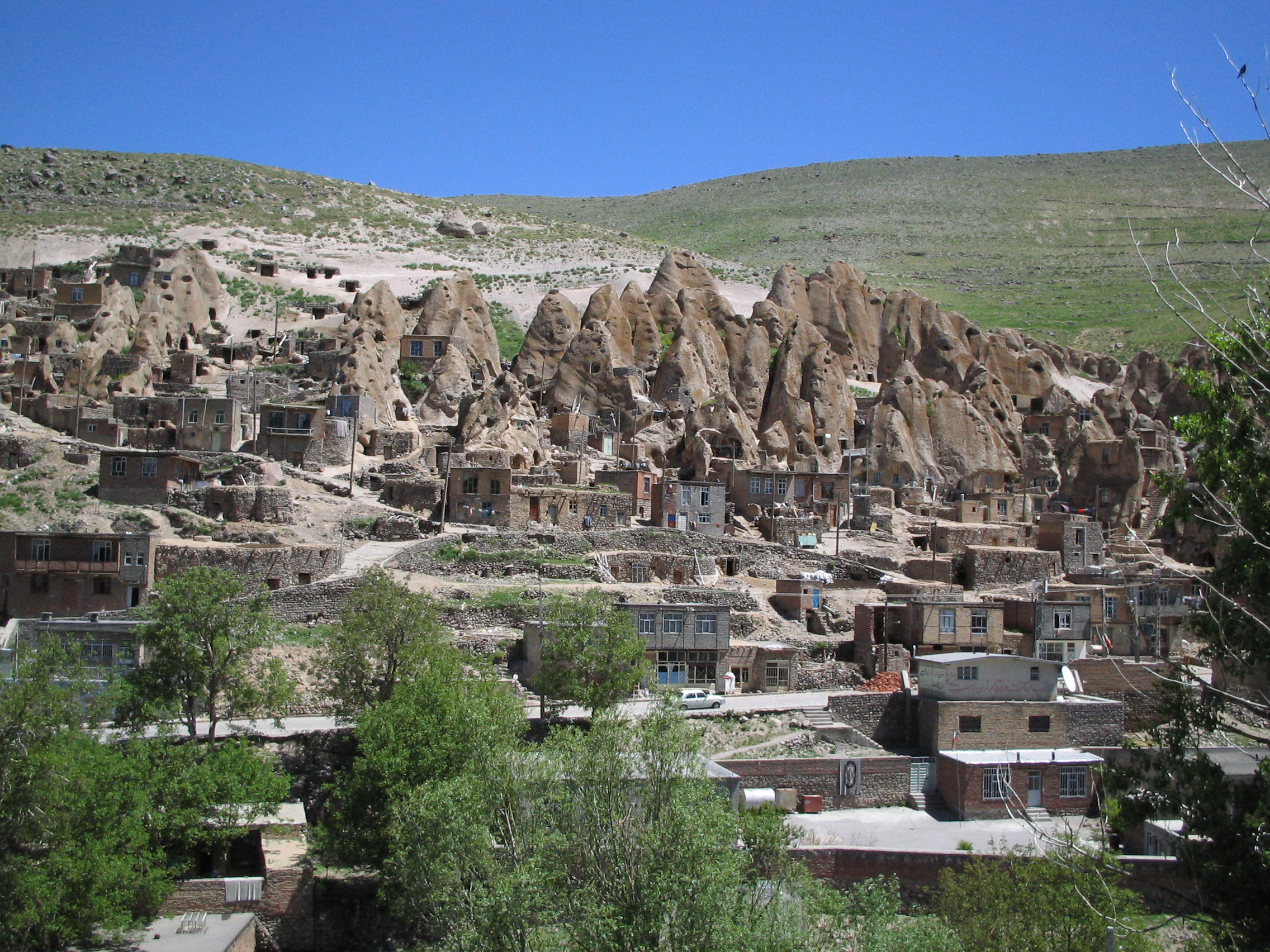
Kandovan
Kandovan is an extraordinary ancient village in Iran, located in the foothills of Mount Sahand in East Azerbaijan Province, renowned for its unique rock-cut architecture. It is one of the very few inhabited cave villages in the world, where residents still live in hand-carved, cone-shaped homes, locally known as “Karaans,” sculpted into volcanic rock formations. This remarkable settlement, often compared to Cappadocia in Turkey, showcases a traditional way of life that has persisted for centuries, with some dwellings believed to be over 700 years old.
According to a popular legend, Kandovan’s first inhabitants arrived in the 13th century, seeking refuge from the invading Mongol army. They initially dug hideouts within the soft volcanic rock formations but eventually decided to settle permanently, gradually expanding and transforming these caves into the multi-story homes seen today.
Guatemala
Tikal Archaeological Site, Petén
Tikal, set within the lush rainforests of northern Guatemala’s Petén region, represents an essential destination because it stands as one of the grandest and most powerful urban centres of the ancient Maya civilisation. Specifically, this UNESCO World Heritage Site features soaring limestone pyramids, such as the iconic 44-metre Temple of the Great Jaguar (Temple I) and the massive 70-metre Temple IV, which pierce through the jungle canopy to offer breathtaking views. Furthermore, exploring the expansive Great Plaza, the intricate residential complex of the Central Acropolis, and the ancient astronomical complex at Mundo Perdido allows visitors to marvel at centuries of royal Maya architecture and engineering. In addition, hiking along misty jungle causeways at sunrise or sunset offers incredible wildlife encounters with howler monkeys, toucans, and coatis echoing through the surrounding national park. Combining magnificent pre-Columbian history with a pristine tropical rainforest setting, this ancient metropolis ultimately provides one of the most unforgettable archaeological experiences in the Americas.

Lake Atitlán
Lake Atitlán, situated in the southwestern highlands of Guatemala, represents an unmissable destination because it is widely celebrated as one of the most beautiful bodies of water in the world. Specifically, filling a massive volcanic caldera, the deep blue lake is dramatically ringed by three steep volcanoes—Atitlán, San Pedro, and Tolimán—alongside lush mountain ridges. Furthermore, exploring the distinct lakeside villages by boat allows travellers to experience vibrant indigenous Maya culture, where communities such as Santiago Atitlán and San Juan La Laguna maintain traditional weaving techniques, colourful textile arts, and local dialects. In addition, outdoor activities thrive around the water, ranging from kayaking and paddleboarding across glassy morning bays to hiking up the Indian Nose peak for breathtaking sunrise views over the basin. Combining serene natural beauty with deep cultural heritage, this high-altitude haven ultimately offers a remarkably peaceful retreat.

Volcán Acatenango Overnight Trek
The Volcán Acatenango overnight trek, starting near Antigua in Guatemala, stands as one of Central America’s most thrilling adventure experiences for hiking enthusiasts. Specifically, the demanding multi-hour ascent takes trekkers through four distinct ecosystems, ranging from agricultural fields and cloud forests to high-altitude alpine pine zones. Furthermore, reaching base camp near the summit rewards hikers with an extraordinary, front-row seat to the neighbouring Volcán de Fuego, which erupts regularly with dramatic displays of ash, smoke, and glowing red lava against the night sky. In addition, waking up before dawn to complete the final steep push to the 3,976-metre summit yields a breathtaking sunrise view spanning the surrounding volcanic chain and the Guatemalan highlands. Combining intense physical challenge with awe-inspiring volcanic activity, this unforgettable mountain expedition ultimately offers a once-in-a-lifetime encounter with raw natural power.

Semuc Champey & Lanquin
Semuc Champey and Lanquín, hidden deep within the dense jungle of central Guatemala’s Alta Verapaz region, represent an essential eco-adventure destination for intrepid travellers. Specifically, Semuc Champey features a breathtaking 300-metre natural limestone bridge that spans the roaring Cahabón River, creating a series of cascading, turquoise water pools perfect for swimming and relaxing. Furthermore, hiking up the steep trail to the El Mirador viewpoint rewards visitors with a stunning aerial view of the emerald river winding through the steep canyon below. In addition, the nearby town of Lanquín serves as the primary base for exploring subterranean wonderlands like the K’anba Caves, where adventurous tourists navigate candle-lit water caverns, or the Lanquín Caves, famous for witnessing thousands of bats emerge at sunset. Combining pristine jungle landscapes, refreshing natural swimming spots, and thrilling cave explorations, this remote river haven ultimately provides one of Central America’s most exciting outdoor escapes.

Japan
Kyoto, Japan
In the air-plane to China (in 2009) I read an interesting article about Kyoto. It turns out you can stay in the Buddhist temple. Every morning you start with a meditation at 7am after that the master brings you green matcha tea and discuss your mediation. The goal of those meditations is to get rid of bad feelings like jealousy, passion, anger. It would be quite nice to stay a week or two there. I loved visiting Tokyo in Japan and it quite stuck to my mind. Their culture and deep traditions makes it very interesting to visit.


Miyajima Island, Japan
Forget ordinary views – Miyajima Island has been turning heads for centuries, and it’s easy to see why it’s one of Japan’s top scenic spots.
Miyajima isn’t just about pretty beaches; it’s a place where you can hike mountain trails and get lost in stunning views of the Seto Inland Sea. Make sure to hit up those Mt. Misen observatories for views that’ll stick with you.
But Miyajima is more than just natural beauty. It’s also a spiritual place, dotted with traditional Japanese architecture. Itsukushima Shrine is a must-see. This vivid vermilion shrine seems to float on the water at high tide, a truly magical sight.
And the grand finale? Picture this: the sun setting behind Miyajima’s Great Torii. The torii, standing in the sea, glows in the warm light, creating a scene that’s pure magic.

Yakushima, Japan
Yakushima, a small island off southern Kyūshū, is a must-see for its magical, primeval forests. I plan to explore this unique landscape, home to ancient yakusugi cedars with their massive, tentacle-like roots, and hike through the moss-covered trails. It’s incredible to think that this otherworldly terrain is believed to have inspired Studio Ghibli’s Princess Mononoke.

Nara Park, Japan
Nara Park is a must-visit in Japan, renowned for its unique blend of cultural heritage and natural beauty. Here, you can wander among ancient temples and shrines, including the iconic Todai-ji Temple with its giant Buddha statue, while freely roaming friendly deer add a magical touch to the serene landscape.

Tateyama Snow Corridor
I really want to visit the Tateyama Snow Corridor and see those incredible, towering walls of snow that reach up to 20 meters high! I can just imagine walking between them on the Tateyama Kurobe Alpine Route, experiencing that almost surreal environment known as “Yuki no Otani.” It must be an absolutely breathtaking visual spectacle to be surrounded by such colossal white cliffs with the bright blue sky above, and I know I’d love to go during the spring when it’s accessible to witness this unique phenomenon in the stunning Northern Japan Alps.
Please leave your recommendations for Japan in the comment section.
Mauritania
Mauritania Iron Ore Train
The Mauritania Iron Ore Train, running along a single 704-kilometre railway across the vast Sahara Desert, offers one of the world’s most extraordinary overland journeys. Specifically, operating since 1963 to transport iron ore from the remote inland mining town of Zouérat to the port city of Nouadhibou, this massive convoy spans up to three kilometres in length, making it one of the longest and heaviest freight trains on Earth. Furthermore, riding the train yields a thrillingly raw adventure, as passengers—both local residents and intrepid travellers—frequently climb directly into open-top cargo hoppers to travel for 12 to 18 hours across empty desert stretches. In addition, sitting on top of crushing ore or in empty steel wagons under brilliant, unpolluted starry night skies exposes travellers to dramatic temperature shifts, swirling black dust, and unforgettable Saharan vistas. Combining intense physical challenge with unparalleled authenticity, this legendary industrial lifeline ultimately provides an unmatched experience for extreme travel enthusiasts.

Mexico
Calakmul Archeological Site
The Pyramids of Calakmul, hidden deep within the sprawling Calakmul Biosphere Reserve in Campeche, Mexico, represent an extraordinary destination because they showcase one of the largest and most powerful ancient Maya cities ever built. Specifically, towering over fifty metres above the dense jungle floor, the Great Pyramid (Structure II) stands as one of the tallest Maya structures in existence, enabling adventurous travellers who scale its steps to gaze across an endless green ocean of pristine rainforest canopy. Furthermore, exploring this UNESCO World Heritage Site yields a remarkably intimate experience, as its remote location near the Guatemalan border keeps crowd numbers low compared to other major archaeological sites across Mexico. In addition, walking through the ancient plazas and moss-covered ruins offers frequent encounters with vibrant wildlife, ranging from vocal howler monkeys and toucans to elusive wild cats. Combining ancient monumental history with raw natural wilderness, this ancient superpower city ultimately delivers an unforgettable retreat into Mesoamerica’s untamed heartland.

Cenote Suytun
Cenote Suytun, located just a short drive outside the colonial town of Valladolid in Mexico’s Yucatán Peninsula, represents an essential stop for travellers seeking one of the most mesmerizing natural marvels in the region. Specifically, this subterranean cavern cenote is internationally famous for its distinctive circular stone walkway stretching into shallow, clear blue waters. Furthermore, visiting near midday allows travellers to witness a dramatic sunbeam pierce through a small aperture in the cave roof, illuminating the central platform like a natural, ethereal spotlight. In addition, descending into the cool underground chamber offers a refreshing break from the tropical heat, surrounded by massive ancient stalactites hanging from the rock ceiling. Offering remarkable photo opportunities, fascinating geological formations, and convenient amenities like rental lifejackets and changing rooms, this iconic sinkhole ultimately delivers a truly surreal experience deep within the Maya heartland.

Chichen Itza Archaeological Site
Chichen Itza, located in the Yucatán Peninsula of Mexico, represents an essential archaeological destination because it stands as one of the most powerful and sophisticated urban centres of the ancient Maya civilisation. Specifically, this UNESCO World Heritage Site and New 7 Wonders of the World feature the iconic El Castillo pyramid (Temple of Kukulcan), a masterclass in ancient astronomical alignment where light and shadow create the illusion of a slithering serpent during the spring and autumn equinoxes. Furthermore, exploring the surrounding ruins reveals remarkably preserved monuments, including the immense Great Ball Court, the columns of the Temple of the Warriors, and the circular observatory known as El Caracol. In addition, visiting the sacred Cenote Sagrado offers a fascinating glimpse into ancient religious rituals and offerings made to the rain god Chaac. Combining extraordinary architectural feats with rich Mesoamerican history, this sprawling ceremonial complex ultimately provides an unforgettable encounter with one of humanity’s greatest ancient empires.

Edzna Archeological Site
The Edzná Archaeological Site, situated roughly an hour inland from the colonial coastal city of Campeche, Mexico, stands as a captivating hidden gem because it offers a remarkably tranquil, crowd-free encounter with ancient Maya splendour. Specifically, flourishing as a powerful regional capital between 400 and 1000 AD, this ancient city is celebrated for its groundbreaking hydraulic engineering, featuring a complex canal and drainage system built to capture and store rainwater. Furthermore, exploring the expansive Great Plaza reveals the grand Nohoch Ná (“Big House”) and the spectacular Great Acropolis, home to the unique Five-Story Building (Building of the Five Floors), a multi-tiered pyramid featuring rare vaulted rooms on each level. In addition, visiting the nearby Temple of the Masks grants visitors a close-up view of remarkably preserved, brightly painted stucco carvings depicting the Maya sunrise and sunset deities. Harmoniously blending various classic architectural styles like Puuc, Petén, and Chenes amidst a peaceful jungle setting, this remarkable site ultimately provides one of the most authentic and atmospheric archaeological journeys on the Yucatán Peninsula.

Palenque Archaeological Site
The Palenque Archaeological Site, nestled against the misty, jungle-clad foothills of Chiapas, Mexico, stands as an unmissable destination because it showcases some of the finest architecture, roof combs, and bas-relief sculptures ever crafted by the ancient Maya. Specifically, flourishing under the famous ruler Pakal the Great in the 7th century, this UNESCO World Heritage Site is celebrated for the majestic Temple of the Inscriptions, where Pakal’s jade-adorned tomb was discovered deep within a hidden subterranean crypt. Furthermore, exploring the grand Palace complex reveals a unique four-story observation tower, sprawling courtyards, and remarkably preserved stucco carvings that detail royal lineages and sacred rituals. In addition, wandering through the surrounding rainforest trails allows visitors to discover lesser-known temples half-swallowed by vines alongside cascading jungle streams and the echoing calls of howler monkeys. Combining sublime artistic mastery with a dramatic, emerald-green jungle setting, this ancient city ultimately delivers one of the most spellbinding archaeological journeys in Mesoamerica.

Teotihuacán Archeological Site
The Pyramids of Teotihuacán, situated just outside Mexico City, represent an unmissable destination because they comprise one of the largest and most mysterious urban centres of the ancient world. Specifically, known as the “City of the Gods,” this sprawling UNESCO World Heritage Site is dominated by the colossal Pyramid of the Sun—one of the largest pyramids in the Western Hemisphere—and the majestic Pyramid of the Moon. Furthermore, strolling along the vast Avenue of the Dead connects visitors to intricate ceremonial plazas, residential compounds, and the Temple of the Feathered Serpent with its elaborate stone carvings. In addition, exploring well-preserved structures such as the Palace of Quetzalpapálotl yields a fascinating look at colorful ancient murals and high-status Mesoamerican architecture. Delivering breathtaking views and deep historical intrigue, this legendary ancient metropolis ultimately provides an unforgettable journey into Mexico’s rich pre-Columbian past.

Toniná Archeological Site
The Toniná Archaeological Site, situated near Ocosingo in the Chiapas highlands of Mexico, represents an essential destination because it showcases one of the ancient Maya world’s most aggressive and architecturally imposing superpowers. Specifically, rising over 70 metres above the surrounding valley floor across seven distinct artificial terraces, the colossal Great Acropolis stands as one of the tallest pyramidal complexes in Mesoamerica, even surpassing Teotihuacan’s Pyramid of the Sun in height. Furthermore, exploring the labyrinthine structure reveals intricate subterranean passages like the Palace of the Underworld, alongside well-preserved stucco friezes that vividly detail cosmic rituals and the city’s fierce military victories over its arch-rival, Palenque. In addition, wandering through the sunken ballcourts and terrace plazas yields close encounters with distinctive “in-the-round” stone sculptures of captured enemy lords and monuments featuring the last known Long Count date of the Classic Maya period, inscribed in 909 AD. Tucked away amidst lush highland landscapes with significantly fewer crowds than neighboring ruins, this formidable fortress city ultimately delivers a profoundly atmospheric and authentic journey into ancient history.

Uxmal Archaeological Site
The Uxmal Archaeological Site, situated in the Puuc region of Yucatán, Mexico, represents an essential destination because it showcases the absolute zenith of classic Maya architecture and art. Specifically, this UNESCO World Heritage Site is famous for its unique Puuc architectural style, characterised by smooth limestone walls topped with elaborate geometric stone mosaics, detailed lattice patterns, and carved masks of the rain god Chaac. Furthermore, exploring the grand central plaza brings visitors face-to-face with the magnificent Pyramid of the Magician (Adivino), an extraordinarily rare oval-shaped pyramid steeped in ancient folklore. In addition, strolling through the surrounding monuments reveals the vast Governor’s Palace, the intricate Nunnery Quadrangle (Cuadrángulo de las Monjas), and the towering Great Pyramid, which offers sweeping views across the surrounding jungle. Offering exceptionally preserved craftsmanship without the heavy crowds found at busier sites, this magnificent ancient city ultimately delivers one of the most elegant and peaceful historical journeys in Mexico.

Morocco
Marrakesh
Marrakesh captivates travellers with its intense energy and rich historic architecture, serving as a vibrant gateway to Moroccan heritage. At the heart of the medina lies Jemaa el-Fnaa, where street performers, musicians, and food vendors transform the central square into an open-air spectacle every evening. Furthermore, visitors love wandering through the nearby labyrinthine souks to browse handmade textiles, ceramics, and leather goods, or stepping into the tranquil courtyard of Bahia Palace to marvel at its intricate zellij tilework and carved cedarwood ceilings.
Beyond the bustling market lanes, the city reveals breathtaking architectural wonders such as the historic 14th-century Madrasa Ben Youssef and the towering 12th-century minaret of the iconic Koutoubia Mosque. In addition, travellers can explore the opulent 16th-century mausoleums housed within the quiet complex of the Saadian Tombs. To experience a serene contrast to the ancient city streets, visitors frequently take a leisurely stroll through the cobalt-blue villa and lush cactus gardens of Jardin Majorelle. Therefore, exploring both the energetic plazas and these quiet historic gems ensures a complete journey through the imperial city.

Fez City
Fez, one of Morocco’s imperial cities, is renowned for its rich history and vibrant cultural heritage, offering a mesmerizing journey back in time. The city is primarily known for Fes el-Bali, its medieval medina, which is a UNESCO World Heritage site and one of the largest car-free urban areas in the world. Visitors can easily get lost (in a good way!) in its labyrinthine alleyways, bustling souks, and hidden courtyards.
Key attractions to see include the Chouara Tannery, the largest and oldest tannery in Fez, where visitors can observe the traditional dyeing process from terraces overlooking the colorful pits. The Al-Attarine Madrasa and Bou Inania Madrasa are stunning examples of Marinid architecture, featuring intricate zellij tilework, carved stucco, and cedar wood. The Al-Qarawiyyin University, one of the oldest continually operating universities in the world, and its adjoining mosque are also central to the medina’s historical and religious significance. Beyond the medina, the Bab Bou Jeloud (Blue Gate) serves as an iconic entrance, and the Jewish Quarter (Mellah) offers a different architectural style and a glimpse into Fez’s diverse past. Exploring the various artisan quarters, from metalworkers to leather goods, provides an authentic insight into the city’s enduring crafts.

“Blue City” – Chefchaouen
Chefchaouen, Morocco, is famously known as the “Blue Pearl” for its distinctive blue-washed buildings that create a serene and picturesque atmosphere throughout its medina. Beyond simply wandering the enchanting blue streets and alleys, visitors can explore Place Outa el Hammam, the main square, which is often bustling with activity and surrounded by cafes and restaurants.
Other key attractions include the Kasbah Museum, an old fortress with beautiful gardens and an ethnographic museum offering insights into the region’s history, and the Spanish Mosque, perched on a hill above the town, providing breathtaking panoramic views of the blue city, especially at sunset. Nature lovers can also venture out to the nearby Ras El Ma (a natural water source and popular local gathering spot) or take day trips to the Akchour Waterfalls and God’s Bridge in the surrounding Rif Mountains for hiking and natural beauty.

Blue Boat Port City – Essaouira
Essaouira, a captivating coastal city resting along Morocco’s windswept Atlantic shore, stands as an unmissable destination because it harmoniously blends historic fortification with a relaxed, bohemian spirit. Specifically, this UNESCO World Heritage Site, originally developed in the 18th century as a planned fortress city, features stunning ocean-facing ramparts complete with weathered brass cannons pointing across the crashing waves. Furthermore, wandering through the pedestrian-friendly medina reveals whitewashed alleys framed by bright blue doors, lively artisan souks known for intricate thuya wood carving, and traditional fish stalls serving fresh daily catches near the bustling harbour. In addition, constant coastal breezes—earning it the reputation as the “Windy City of Africa”—create world-class conditions for windsurfing and kitesurfing along its expansive sandy beaches. Combining rich multicultural heritage, vibrant music culture, and a distinctively easy-going pace, this coastal haven ultimately delivers a refreshing, sea-scented escape from Morocco’s bustling inland cities. Oh yes, in the marina you can taste fresh either raw or grilled seafood! I’ve tasted my first sear urchin in there and incredibly delicious oysters!

Hollywood Favourite – Aït Ben Haddou
Aït Ben Haddou, a striking earthen fortress complex located along the historic caravan route between the Sahara Desert and Marrakech in southern Morocco, stands as an unmissable destination because it represents one of the finest preserved examples of traditional Moroccan earthen architecture. Specifically, this iconic UNESCO World Heritage Site is constructed entirely from clay, straw, and gravel, featuring a soaring fortified village (ksar) lined with defensive towers, grand gateways, and tightly packed earthen homes perched dramatic above the Ounila River. Furthermore, wandering through the narrow, winding alleys leads visitors up to the ancient hilltop granary (agadir), which offers sweeping panoramic views across the valley and surrounding Atlas Mountain peaks. In addition, its breathtakingly timeless aesthetic has made it a celebrated backdrop for Hollywood epics, starring in films like Gladiator, Lawrence of Arabia, and Muppets Most Wanted. Combining deep historical significance, remarkable mudbrick engineering, and cinematic fame, this ancient fortress ultimately provides an unforgettable journey into Morocco’s rich architectural heritage.

Merzouga desert
The Merzouga Desert, located in southeastern Morocco near the Algerian border, represents an essential destination because it encompasses Erg Chebbi, a breathtaking sea of wind-sculpted sand dunes. Specifically, reaching heights of up to 150 metres, these massive golden dunes display ever-shifting colours ranging from pale gold at noon to deep crimson at sunset. Furthermore, taking a camel trek across the undulating dunes allows travellers to experience authentic Bedouin and Berber-style desert camp experiences, complete with traditional meals, campfire music under brilliant starry skies, and thrilling sand-boarding sessions down the steep slopes. In addition, waking up early to watch the sunrise over the vast Saharan horizon offers a remarkably peaceful and spiritual moment. Combining raw natural beauty, rich Amazigh (indigenous ethnic group of North Africa) and nomadic desert culture, and classic Saharan landscapes, this iconic expanse ultimately delivers an unforgettable gateway to North Africa’s wild nature.

Norway
The Norwegian Fjords
The Norwegian Fjords, particularly the UNESCO-listed Geirangerfjord and Nærøyfjord, are worth visiting because they present some of the most dramatic, untouched landscapes on the planet. Carved out by retreating glaciers, these deep blue waterways are flanked by near-vertical, emerald-green cliffs that rise sharply from the water’s edge and are laced with roaring waterfalls. Visiting this region allows you to experience the sheer scale of nature up close via kayaking, fjord cruises, or iconic high-altitude hikes like the jaw-dropping Trolltunga and Preikestolen (Pulpit Rock) viewpoints.

The Lofoten Islands
The Lofoten Islands are an absolute must-see because they seamlessly blend alpine grandeur with traditional, slow-paced coastal charm. This Arctic archipelago features razor-sharp, snow-dusted mountain peaks that plunge directly into white-sand beaches and turquoise waters. Travelers flock here to stay in authentic, converted red fishing cabins (rorbuer), photograph postcard-perfect villages like Reine, and witness Arctic surfers taking on the swells at Unstad Beach.

Bergen
Bergen is worth exploring because it serves as the ultimate historic and cultural gateway to western Norway’s wild landscapes. Steeeped in maritime history, its crown jewel is Bryggen, a vibrant wharf lined with leaning, colorful wooden merchant houses that date back to the Hanseatic League era. Beyond its rich heritage and world-class seafood scene, Bergen provides effortless urban-to-nature transitions, letting you take the Fløibanen Funicular right from the city center up to Mount Fløyen for spectacular panoramic views of the surrounding fjords and mountains.

Ålesund
Ålesund earns its spot on the itinerary because of its unique, fairy-tale look that contrasts completely with the rest of Norway’s traditional timber architecture. After a devastating fire in 1904, the entire coastal town was rebuilt in a highly uniform, highly stylized Art Nouveau architectural fashion, complete with turrets, spires, and intricate stone ornamentation. Walking its picturesque canals feels like stepping into a living museum, and climbing the 418 steps up to the Aksla Viewpoint provides a world-famous view of the town draped over a cluster of islands.

Oslo
Oslo is worth visiting because it is a premier hub for modern Scandinavian art, architecture, and sustainable urban living. The walkable capital has undergone a massive architectural renaissance, showcased by the futuristic, white-marble Oslo Opera House—where you can walk directly onto the roof—and the striking Munch Museum. It perfectly marries big-city culture, design, and history (like the medieval Akershus Fortress) with the environment, allowing you to easily hop from a bustling city neighbourhood right onto a ferry to explore the tranquil islands of the Oslofjord.

Tromsø (The Best Place for Northern Lights)
Tromsø is widely recognized as the premier destination in Norway for viewing the Northern Lights because of its ideal geographical position directly underneath the auroral oval. Situated above the Arctic Circle, this lively city acts as the main hub for aurora hunters, offering excellent sighting odds from September to April alongside top-tier infrastructure, international flight connections, and experienced tour guides. Beyond chasing the green ribbons of light, Tromsø is a fantastic winter playground where you can enjoy whale watching, husky sledding, and learning about indigenous Sami culture.

Svalbard
Svalbard is a bucket-list destination because it represents Europe’s final polar frontier, sitting roughly halfway between mainland Norway and the North Pole. It is an otherworldly, ice-capped wilderness dominated by massive glaciers, frozen fjords, and a polar bear population that actually outnumbers the human residents. Staying in the main settlement of Longyearbyen—the world’s northernmost functional town—gives you access to thrilling Arctic safaris via snowmobile or dog sled, and lets you experience unique phenomena like 24 hours of total darkness during the Polar Night winter or the perpetual glow of the Midnight Sun in summer.

Swimming with Orcas
possible primarily in northern Norway during the winter months when herring migration brings pods close to the fjords. Key details include late October to February timing, water temperatures around 4°C (39°F), and the use of heavy-duty drysuits.
Location: Skjervøy and the fjords around Tromsø and Alta in Arctic Norway.
Season: Late October through January or February.
The Environment: Frigid water temperatures near freezing require thick thermal layers and drysuits provided by operators.
The Action: Snorkeling and freediving rather than scuba diving, letting pods of orcas pass or circle while hunting herring bait balls.
Safety & Behavior: Mixed opinions exist on the water, but while wild orcas are powerful apex predators, no documented fatal attacks on humans in the wild exist. Guides strictly control when you enter the water to protect both humans and marine life.
Get ready to feel your heart race as you slip into the waters and come face-to-face with an orca! The awe and wonder of seeing these in

Peru
Paracas, Peru
Paracas, Peru is famous for its natural beauty and rich biodiversity. Located on the Pacific coast, Paracas is renowned for the Paracas National Reserve, which protects a unique marine ecosystem and provides a habitat for various species of birds, marine mammals, and fish. The area is also known for its stunning beaches, rugged cliffs, and unique rock formations.

Huacachina, Peru
Huacachina in Peru is famous for its stunning desert oasis. Nestled in the Ica region, Huacachina is a small village built around a natural lagoon surrounded by towering sand dunes. It is a popular tourist destination known for its unique desert landscape and thrilling activities such as sandboarding and dune buggy rides.
Nazca lines, Peru
The Nazca lines are a series of enormous geoglyphs located in the Nazca Desert in Peru. They were created by the ancient Nazca civilisation between 500 BCE and 500 CE. The lines depict various animals, plants, and geometric shapes, some of which cover several kilometers.

Arequipa & Hiking Colca Canyon, Peru
Arequipa, a city in southern Peru, is famous for its stunning colonial architecture built with white volcanic stone. It is known as the “White City” and has been designated as a UNESCO World Heritage site. Arequipa also boasts a vibrant culinary scene, with traditional dishes such as rocoto relleno and chuño prepared with local ingredients.
Hiking Colca Canyon, located near Arequipa, is famous for being one of the world’s deepest canyons. It is more than twice as deep as the Grand Canyon in the United States. The Colca Canyon offers breathtaking views of terraced agricultural fields, traditional villages, and the flight of the Andean condor, one of the world’s largest birds. Adventure enthusiasts flock to the area for multi-day treks, where they can explore the diverse flora and fauna, soak in hot springs, and interact with indigenous communities.

Rainbow Mountain, Peru
Rainbow Mountain, also known as Vinicunca, in Peru is famous for its vibrant and multicolored striped landscape. This natural wonder gained popularity in recent years due to its unique geological formations and stunning array of colors. The mountain’s distinct hues, ranging from red, pink, yellow, and turquoise, are a result of different minerals and sediments present in the soil. Rainbow Mountain has become a popular hiking destination for adventurous travelers seeking to witness its breathtaking beauty. The hike to the summit can be challenging, as it reaches altitudes over 5,000 meters (16,400 feet), but the reward is the unparalleled panoramic views of the surrounding Andean peaks and the mesmerizing colors of Rainbow Mountain itself.
Visited Rainbow Mountain in October 2024.
Any other favourite places in Peru you recommend adding? Please add it in the comments.
Turkey
Turkey hosts an incredible abundance of archaeological treasures that rival, and in some cases exceed, the preservation found within Italy itself. The imperial expansion of Rome left a magnificent footprint across Anatolia, resulting in several must-see ruin complexes.
Cappadocia – Balloon City
Cappadocia, in central Turkey, is a region famous for its surreal, otherworldly landscapes shaped by volcanic activity and erosion. Its most iconic sights are the “fairy chimneys,” tall, cone-shaped rock formations that dot the valleys.
A top attraction is taking a hot air balloon ride at sunrise, offering breathtaking panoramic views of these unique formations as hundreds of balloons fill the sky. Visitors can also explore ancient cave dwellings and churches carved into the soft rock, particularly at the Göreme Open Air Museum, a UNESCO World Heritage site. Additionally, there are vast underground cities like Kaymakli and Derinkuyu, which once served as hiding places for early Christians. Other activities include hiking through picturesque valleys like Rose Valley, Love Valley, and Pigeon Valley, visiting Uchisar Castle for panoramic views, and exploring the pottery-making town of Avanos. Many visitors choose to stay in unique cave hotels carved directly into the rock formations.

Ephesus
This vast archaeological treasure is widely considered one of the most complete and spectacular Roman cities remaining in the entire Mediterranean region. Serving once as the prosperous capital of the Roman province of Asia Minor, it was a bustling metropolis inhabited by an estimated a quarter of a million citizens. Strolling down the beautifully preserved, weathered marble paving of Curetes Street allows adventurers to visualize ancient life exactly as the Romans experienced it millennia ago. The undisputed crown jewel of the complex is the magnificent facade of the Library of Celsus, which originally guarded over twelve thousand precious scrolls. Additionally, visitors can stand inside the gargantuan Great Theatre, an architectural marvel capable of accommodating twenty-five thousand spectators for theatrical plays and dramatic gladiatorial combats. The exceptional state of preservation makes Ephesus Ancient City an unmissable destination for anyone wishing to immerse themselves in the grand scale of the Roman Empire.

Termessos
This ancient Pisidian city is widely considered one of the most spectacular, untouched archaeological treasures in southwestern Turkey, built high into a steep cleft of the Taurus Mountains. Unlike most classical settlements that submitted to imperial powers, Termessos famously resisted the siege of Alexander the Great in 333 BC, who ultimately abandoned his assault and labelled the fortress an eagle’s nest that was impossible to conquer. The ruin site is preserved inside a rugged national park, completely enveloped by dense pine forests and wild overgrowth, creating an authentic atmosphere of discovery that feels entirely distinct from more manicured archaeological parks. Strolling through the mountain pass allows modern adventurers to experience the ruins exactly as early explorers found them, with monumental stone blocks and sarcophagi lying beautifully scattered by centuries of seismic activity.

Hierapolis
Situated uniquely on top of the famous white calcium travertine terraces of Pamukkale, this ancient city functioned as the premier thermal spa destination of the classical world. Founded originally in the Hellenistic era, it flourished tremendously under direct Roman rule, attracting thousands of weary travellers who sought the therapeutic, mineral-rich hot springs for healing. The extensive site contains remarkably preserved monuments, including a grand Roman theatre with intricately carved mythological reliefs that offers sweeping panoramic views of the cascading white cliffs below. Furthermore, exploring the vast Necropolis reveals over a thousand ancient tombs and sarcophagi, making it one of the largest and most fascinating ancient cemeteries in Turkey. Travellers can even swim among authentic fluted Roman columns submerged within the warm waters of Cleopatra’s Pool. Consequently, Hierapolis provides an extraordinary combination of natural geological wonders and magnificent imperial history.


Aphrodisias
Named after Aphrodite, the ancient goddess of love, this isolated city became highly prosperous during the Roman Imperial period due to its proximity to premium marble quarries. The settlement enjoyed the personal protection of Emperor Augustus, which allowed a world-renowned school of master sculptors to thrive and decorate the urban landscape with unparalleled artistry. The site feels remarkably tranquil and less crowded than other Aegean ruins, allowing for peaceful exploration of its exquisite monuments. A major highlight is the breathtaking ancient stadium, which remains one of the largest and best-preserved athletic arenas from the classical world, capable of seating thirty thousand spectators. Likewise, the delicate columns of the Temple of Aphrodite and the monumental gateway known as the Tetrapylon showcase the exceptional craftsmanship of the local artisans. Therefore, Aphrodisias Ancient City represents a true hidden gem that highlights the artistic sophistication of the Roman golden age.

Aspendos
Located a short distance inland from the Mediterranean coast, this ancient city is globally celebrated for possessing the most perfectly preserved Roman theatre in existence. Constructed during the second century AD under the reign of Emperor Marcus Aurelius, the structure was engineered by a local architect named Theodoros and could comfortably accommodate fifteen thousand spectators. Unlike most ancient theatres where the stage background has crumbled over time, the towering, multi-storey architectural backdrop at Aspendos remains completely intact, complete with its original columns and decorative niches. The acoustic design is so extraordinarily precise that a faint whisper spoken on the stage can be easily heard from the highest row of seating. In addition to the theatre, the nearby hills hold the impressive, towering arches of a massive Roman aqueduct system that once supplied water to the metropolis. Thus, visiting Aspendos Theatre provides an unmatched opportunity to witness the functional genius of Roman engineering in its purest form.

Turkey offers an immense variety of historical landmarks that extend far beyond its classic Greco-Roman inheritance, spanning the very dawn of human civilisation to the mighty empires of the Bronze Age. Several highly significant archaeological sites throughout the country provide an essential glimpse into these diverse eras.
Göbeklitepe
This destination is universally recognised as the oldest known temple complex in the world, dating back over eleven thousand years to the Pre-Pottery Neolithic period. Situated in southeastern Anatolia, the discovery of this prehistoric site completely revolutionised the understanding of early human history by suggesting that organised religion actually predated agriculture and permanent settlement. The atmosphere surrounding the hillside excavations feels deeply mysterious and ancient, inviting guests to ponder the lives of the hunter-gatherers who carved massive limestone blocks without the aid of metal tools. For instance, the sheer antiquity of the monument places it thousands of years before both Stonehenge and the Egyptian pyramids.

Ancient City of Troy
The settlement stands as one of the most famous and historically significant locations in the world, forever immortalised by Homer in the epic tales of the Trojan War. Located near the coastal city of Çanakkale, the archaeological mound comprises nine distinct layers of civilisation built on top of one another, spanning from the early Bronze Age all the way through to the Roman period. Exploring the layered trenches and stone fortifications provides a fascinating journey through time where mythology blends seamlessly into physical archaeology. Therefore, visiting the site offers a unique opportunity to stand on the legendary plain where ancient heroes are said to have fought.

Pergamon Ancient City
This urban landscape was once the magnificent capital of the powerful Hellenistic Attalid Kingdom before becoming a major administrative and cultural hub under the Roman Empire. Perched dramatically on top of a steep, towering hill overlooking the modern town of Bergama, the acropolis features a majestic layout designed to showcase the wealth and intellectual superiority of its rulers. The dramatic hilltop setting provides sweeping panoramic views over the surrounding valley and creates a genuinely awe-inspiring experience for history enthusiasts. Consequently, the combination of brilliant architecture and commanding geography makes it an unforgettable stop on an Anatolian expedition.

Archaeological site of Hattusha
The fortified location served as the grand capital city of the Hittite Empire, a formidable superpower that controlled central Anatolia during the Late Bronze Age. Located amidst the rugged, rolling hills of Çorum province, the expansive ruins are enclosed by kilometres of monumental stone walls that highlight the defensive genius of this ancient civilization. Walking through the vast, quiet landscape evokes a profound sense of isolation and grandeur, allowing travellers to appreciate the scale of an empire that once directly challenged the pharaohs of Egypt. In addition, the quiet and uncrowded nature of the location provides a peaceful alternative to the busy coastal resorts.

Cleopatra Antique Pools
This thermal spring represents an extraordinary natural hot spring situated inside the classical spa metropolis of Hierapolis, directly above the famous white calcium terraces of Pamukkale. The thermal waters have been celebrated for their therapeutic, mineral-rich properties since antiquity, attracting thousands of weary travellers, including Roman emperors, who sought relief and healing within the warm currents. The unique appeal of the pool lies in the fact that it allows modern swimmers to bathe directly among authentic, fluted Roman columns and marble fragments that collapsed into the water during a massive earthquake in the seventh century AD. The water remains consistently warm throughout the entire year, maintained naturally by geothermal activity at a comfortable temperature of approximately thirty-six degrees Celsius. Therefore, it provides a profoundly immersive historical experience that blends natural geological phenomena with genuine ancient archaeology.

Amyntas Rock Tombs
This striking archaeological monument consists of several ancient burial chambers carved directly into the sheer limestone cliff face overlooking the modern harbour city of Fethiye, which occupied the territory of the ancient Lycian settlement known as Telmessos. Constructed during the fourth century BC, the most iconic and grandest structure within the complex is the individual tomb dedicated to Amyntas, son of Hermagios, as identified by a distinct ancient Greek inscription etched into the weathered rock wall. The ancient Lycians maintained a deep-seated cultural belief that the souls of their deceased were carried into the afterlife by magical winged creatures, which directly influenced their practice of placing prominent aristocratic tombs in high, vertical positions that overlooked the sprawling plains. Visitors frequently tackle the steep climb up a winding flight of over two hundred stone steps to stand directly at the threshold of the monument, gaining a firsthand view of the precise architectural skill required to transform a solid mountain facade into a permanent resting place. Similarly, the elevated vantage point provides adventurers with a magnificent panoramic view of the turquoise bay, creating a memorable experience where monumental ancient history coexists seamlessly with modern coastal life.

Lycian Rock-Cut Tombs of Myra
This spectacular archaeological complex is situated in the modern town of Demre and represents one of the most visually dramatic examples of Lycian funerary architecture in existence. Carved directly into a sheer, towering limestone cliff face during the fourth century BC, the vertical necropolis resembles an intricate, multi-storey honeycomb of ancient monuments that dominates the surrounding landscape. The Lycian people strategically positioned these tombs high above the valley floor because they believed that the dead were transported to the afterlife by winged, celestial creatures, meaning that higher burial sites facilitated a swifter journey. The tombs are divided into two distinct clusters, known as the Ocean Necropolis and the River Necropolis, both located just a short distance from a grand, remarkably preserved Roman theatre. The extraordinary preservation of the rock walls allows modern visitors to appreciate the immense scale and architectural devotion that this ancient civilization dedicated to honoring their ancestors.

Zeugma Mosaics Museum
This world-renowned cultural institution is located in the southeastern city of Gaziantep and stands as the largest mosaic museum on the planet, dedicated to preserving an unparalleled collection of Roman art. The immense treasures housed within the facility were salvaged from the ancient city of Zeugma, a wealthy Roman frontier outpost along the Euphrates River that was tragically submerged by a modern dam project. The museum is expertly engineered to replicate the original environments of the Roman villas where these masterpieces were uncovered, utilizing advanced lighting techniques and architectural columns to display the artwork exactly as it would have appeared to wealthy Roman patricians. The remarkable preservation of the stones reveals incredibly vibrant pigments, detailed shadowing, and lifelike textures that highlight the highest pinnacle of Roman luxury and artistic sophistication. The undisputed centerpiece of the entire collection is the hauntingly beautiful “Gypsy Girl” mosaic, which is displayed in a dedicated, dark chamber to emphasize the piercing, enigmatic gaze of the figure. Consequently, the museum provides a profoundly moving exploration of ancient Roman domestic life and mythological storytelling.

The Lycian Way (Likya Yolu)
This world-renowned long-distance footpath stretches for over 500 km (540 kilometres or 335 miles) along the rugged coast of southwestern Turkey, tracing the ancient borders of the historic Lycian League, which takes around 25 or 30 days to complete on foot. Established in 1999 by British expat Kate Clow, the route winds through dramatic pine forests, steep coastal cliffs, and pristine turquoise bays, offering an immersive journey that connects nature with ancient history. The trail follows old mule tracks, nomad paths, and Roman roads, leading hikers directly past isolated ruins that are inaccessible by standard transport. Therefore, the path provides an extraordinary trekking adventure that allows travellers to explore the raw beauty of the Mediterranean coast while discovering the forgotten outposts of classical antiquity.


Turkey provides a spectacular variety of trekking options that attract outdoor enthusiasts from all over the world, combining dramatic coastal footpaths, high-altitude alpine ridges, and ancient pathways steeped in history. The Carian Trail stands as the country’s longest official route, stretching over 850 kilometres across the southwestern Aegean region through aromatic pine forests and remote peninsulas. For a deeper mountain experience, the St Paul Trail traces the historic missionary’s path for 500 kilometres across the rugged Taurus Mountains and up into the central Anatolian lake district. Further north, the alpine Kaçkar Mountains Trails offer demanding, high-altitude glaciated passes and lush wildflower meadows reminiscent of the Swiss Alps, providing a cool haven during the hot summer months. Finally, the Cappadocia Valley Trails deliver visually surreal day hikes directly beneath towering volcanic fairy chimneys and ancient rock-cut cave churches, creating a truly unique geological and cultural journey.

Saudi Arabia
Hegra
Hegra represents one of the most extraordinary historical and natural landscapes in the world, serving as a vast living museum carved into the golden sandstone of northwestern Saudi Arabia. As the first UNESCO World Heritage Site in the country, it showcases the spectacular engineering of the ancient Nabataean Kingdom, mirroring the famous architecture of its sister city, Petra, in Jordan. The atmospheric site features dozens of monumental monumental tombs carved into freestanding rock towers, which rise dramatically out of the surrounding desert sand. Exploring the empty stone chambers allows modern adventurers to marvel at the well-preserved inscriptions and artistic flourishes that have withstood the elements for over two millennia. Therefore, it serves as the ultimate destination for understanding the ancient trade routes that crossed the Arabian Peninsula.
The Nabataean spiritual sanctuary at Hegra is centered around the colossal sandstone mountain of Jabal Athlab, which served as the grand open-air heartland for ancient religious devotion and holds numerous rock-cut shrines, sacred inscriptions, and water cisterns. Worshippers originally entered this sacred mountain realm by traversing The Siq, a narrow, shaded natural canyon passage whose vertical cliff walls are adorned with carved niches and images of protective deities. Right at the entrance to this dramatic gorge sits Al Diwan, a magnificent, open-fronted rock-cut chamber lined with stone benches where the Nabataean elite gathered for communal religious feasts and ritual banquets, providing clear proof of the complex spiritual ceremonies that bound this ancient desert civilisation together. Furthermore, this architectural mastery is perfectly complemented by Qasr al-Bint (The Tomb of the Daughter), the largest and most architecturally sophisticated tomb facade in the entire necropolis, which features an exceptionally preserved, intricately carved portal flanked by elegant columns and a grand triangular pediment that beautifully illustrates the high societal status and funerary artistry of the ancient Nabataean elite.

Tomb of Lihyan son of Kuza, traditionally referred to as Qasr al-Farid (The Lonely Castle), stands as the most famous and architecturally striking monument in the entire region. This colossal tomb was carved out of a single, entirely isolated sandstone monolith that rises dramatically above the vast desert plains. The monument remains uniquely unfinished, with the stone-cutting growing increasingly rough toward the base, which offers modern historians a fascinating visual blueprint of exactly how Nabataean architects chiselled facades from the top down.
Edge of the World (Jebel Fihrayn)
Edge of the World provides one of the most jaw-dropping natural views in the entire Middle East, located just a short distance northwest of the capital city of Riyadh. This dramatic geological wonder is part of the immense Tuwaiq Escarpment, where sheer limestone cliffs drop down approximately three hundred metres into an ancient, dried-up ocean bed below. Standing at the precipice offers an endless, unobstructed panorama of the surrounding desert plains, creating the distinct sensation of standing at the very brink of the Earth. The landscape looks particularly magical during the late afternoon, as the setting sun paints the layered rock formations in brilliant shades of orange, pink, and deep gold. Consequently, the rugged beauty and immense scale of the cliffs make it an essential pilgrimage for hikers and photography enthusiasts alike.

Wadi Al-Disah
Wadi Al-Disah is a spectacular natural marvel situated in the mountainous northern province of Tabuk, offering a stark and refreshing contrast to the surrounding arid plains. The destination consists of a grand, deep canyon framed by towering red sandstone columns and cliffs that appear to guard the valley below. A freshwater stream flows continuously along the canyon floor, nurturing an incredibly lush oasis packed with tall palm trees, wild herbs, and thick beds of reeds. Walking through the narrow, shaded passes allows travelers to appreciate a unique microclimate where cool breezes roll off the green vegetation. Likewise, the sheer isolation of the canyon ensures a quiet and pristine wilderness experience far removed from modern urban sprawl.

Elephant Mountain
This colossal monolith stands as one of the most famous and iconic natural stone formations in the entire Kingdom of Saudi Arabia, located a short journey south of the main Hegra archaeological boundary within the wider AlUla valley. The destination consists of a massive block of golden sandstone that has been meticulously sculpted over millions of years by the relentless forces of wind and water erosion, transforming the geological structure into a shape that perfectly resembles a giant elephant with its trunk resting firmly on the desert floor. The natural wonder rises dramatically out of a vast expanse of soft, fine sand, surrounded by jagged rock walls that turn a beautiful deep orange during twilight. The surrounding site has been thoughtfully enhanced with sunken seating areas, ambient lighting, and elegant stargazing lounges, creating a relaxing and surreal environment where guests can admire the grand scale of nature’s artistry under the desert stars. Consequently, the combination of raw geological history and modern leisure facilities makes Elephant Mountain an essential stop for anyone exploring the rugged landscapes of northwestern Arabia.

Al Naslaa rock
This geological marvel represents one of the most enigmatic and heavily debated natural landmarks in the world, situated in the desert plains near the ancient oasis town of Tayma in northwestern Saudi Arabia. The destination consists of a massive sandstone boulder that rises approximately six metres in height and stands split neatly down the middle into two almost equal halves. What makes the landmark extraordinarily famous is the laser-straight precision of this vertical gap, which slices through the solid stone with smooth surfaces on both sides, separated by only a few millimetres. Each of the massive divided sections balances precariously on its own incredibly small stone pedestal, remaining completely independent and stable without touching the other half. While popular alternative theories frequently attribute this precision to advanced ancient technology or supernatural forces, geologists confirm that the clean gap is a natural “joint” likely caused by minor tectonic shifts combined with thousands of years of wind-blown sand erosion that polished the stone to perfection. Consequently, the striking symmetry and seemingly impossible balance make Al Naslaa rock formation a premier destination for photography enthusiasts and travellers fascinated by the unusual forces of nature.

Tanzania
Animal Safari
If you go on a Tanzanian safari, you’d be amazed by the wildlife. In the Northern Circuit (Serengeti, Ngorongoro Crater), you’d see millions of wildebeest and zebra during the Great Migration (best from December to March in the Southern Serengeti for calving, or July to October in the Northern Serengeti for river crossings), plus lions, cheetahs, leopards, elephants, giraffes, hippos, and the rare black rhino (often seen year-round in Ngorongoro Crater, but more easily from June to October when vegetation is shorter). It’s also a birdwatcher’s paradise with flamingos and vibrant Lilac-breasted Rollers (birding is generally excellent from November to April when migratory species are present). Head to the Southern Circuit (Nyerere National Park) for a chance to spot African wild dogs (best during their denning season from June to August), as well as crocodiles and lots of elephants on boat safaris (overall game viewing in Nyerere is best from June to October). For a truly unique experience, the Western Circuit’s Mahale Mountains National Park offers incredible chimpanzee trekking (easiest sightings from July to October when they are lower on the slopes).
Serengeti National Park
Serengeti National Park stands as one of the most famous wildlife sanctuaries across the entire globe. Millions of wildebeests and zebras journey across these vast savannah plains during the annual Great Migration. Furthermore, vast numbers of predators like lions, leopards, and cheetahs follow these large herds throughout the seasons. Visitors find themselves completely surrounded by untamed African landscapes.

Tarangire National Park
Tarangire National Park provides a peaceful safari experience away from the heaviest tourist crowds. Massive baobab trees dot the dry landscape along the Tarangire River. Similarly, huge herds of elephants gather around the water sources during the dry season. Birdwatchers discover an impressive variety of species throughout the riverbanks.

Lake Manyara National Park
Lake Manyara National Park sits nestled right at the base of the Great Rift Valley escarpment. Thousands of flamingos gather along the alkaline lake shore to turn the water pink. However, many visitors come specifically to see the park’s unusual tree-climbing lions resting in the branches. Dense groundwater forests give way to grassy floodplains brimming with baboons and giraffes.

Important: check the detailed plan of the trip, as it can be only couple of days of actual Safari and the rest just spent in the car or villages and if that is what you want, then it is your decision. Most people probably would want to maximise the days spent watching wild life than just riding a car for 4 days.
I found these two option of 9 and 12 days for £ 3k.


A list of some reputable local Safari companies in Tanzania are Taswira Africa Safaris, Macpace Tours and Safaris, Makasa Tanzania Safari, and Bright African Safaris. Though I struggled to find the price lists on the websites of these providers and you need to ask for a quote.


Ngorongoro Conservation Area
Ngorongoro Conservation Area features the largest intact volcanic caldera found on Earth. Thousands of animals live within this massive natural amphitheatre all year round. Consequently, travellers can often observe the Big Five within a single morning safari drive. Local Maasai communities also live alongside the abundant wildlife in this region.

Kilimanjaro summit trek
A future goal of mine is to embark on a 7-9 day trek to climb Kilimanjaro and experience the unique challenges and rewards it offers, with the ultimate aim of reaching its 5,895-meter (19,341 feet) summit, the “Roof of Africa.” I’m drawn to the idea of a physically and mentally engaging journey through its diverse landscapes over that timeframe. I wish to see those unforgettable views, especially the sunrise from Uhuru Peak, and the profound sense of personal accomplishment that comes with such an adventure to that incredible height after days of trekking.
I found this organiser that charges £ 2k or less (depending on the date).

Other reputable local Tanzania companies for Kilimanjaro trek include include Altezza Travel, Twende Africa Tours, Kandoo Adventures, and Ultimate Kilimanjar.


Nungwi Beach, Zanzibar
Nungwi Beach sits on the northern tip of the island and stands out as one of Zanzibar’s most celebrated coastal locations. Fine powdery white sand stretches alongside turquoise waters that stay suitable for swimming throughout the day due to low tidal changes. Furthermore, the surrounding village offers a lively setting full of beachside eateries and traditional dhow boatyards.

Changu Island, Zanzibar
Changu Island, often called Prison Island, lies just a short boat ride away from the capital’s coast. Historical buildings constructed in the late 19th century tell stories of its former role as a quarantine station. On the other hand, the primary highlight for most guests remains the sanctuary housing giant Aldabra tortoises.

Mnemba Island, Zanzibar
Mnemba Island features a secluded private paradise surrounded by a protected marine reserve off the northeast coast. Boat trips take excursionists out to the outer ring of pristine coral reefs that circle the island. Consequently, scuba divers and snorkelers encounter rich marine life ranging from green sea turtles to colourful tropical fish.

United States of America
Mooney Falls, Arizona
Mooney Falls is a stunning waterfall located within the Havasupai Indian Reservation in Arizona, not the Navajo Nation. Plunging dramatically around 200 feet, its vibrant blue-green waters cascade into a beautiful pool below, characteristic of the Havasu Creek waterfalls. Visiting Mooney Falls typically requires obtaining a permit from the Havasupai Tribe and is part of a strenuous, multi-day hiking experience into the remote Havasu Canyon, known for its challenging descent involving tunnels, chains, and ladders. The view there is spectacular!

The primary method of access is a challenging hike into the canyon. The journey begins at Hualapai Hilltop, the designated trailhead. From the hilltop, visitors embark on an approximately 8-mile descent to the remote Supai Village. The trail is unpaved and can be steep and strenuous, particularly on the return hike out of the canyon.
From Supai Village, the hike continues for another 2 miles downstream to reach the main campground area. Mooney Falls is located roughly another 0.5 to 1 mile past the campground. Reaching the very base of Mooney Falls involves a separate, particularly adventurous descent down a steep cliff face using a system of hand-cut tunnels, chains, and ladders. This part of the route is exposed and can be challenging for those with a fear of heights. Making it approximately 10.5 to 11 miles (35.4 km) one way and hiking up the hill to come back, so 22 miles (35.4 km) in total.
While hiking is the most common way to experience the full journey into the canyon, a helicopter service is also available for transport between Hualapai Hilltop and Supai Village. However, this service primarily serves tribal members and is not always consistently available for tourists. Even if opting for the helicopter, visitors still need a valid permit and must hike from Supai Village to the campground and then to Mooney Falls.
The giant trees of the Redwood Forest, Northern California
Visiting the giant trees of the Redwood Forest in Northern California would be an awe-inspiring experience that could connect you directly with the raw power and ancient beauty of nature. Standing beneath these towering giants, some of the tallest and oldest living things on Earth, might provide a profound sense of scale and perspective, making you feel small in the most humbling way. The quiet, misty atmosphere of the forest, with filtered sunlight dappling through the canopy high above, would create a serene and almost spiritual environment, offering a peaceful escape from the hustle and bustle of modern life and a chance to witness a truly magnificent natural wonder.

Glacier National Park, Montana
visiting Glacier National Park would be an unforgettable journey into a landscape shaped by ice and time. Located in Montana, bordering Canada, exploring this park might reveal stunning glaciated peaks, pristine alpine lakes, and the famous Going-to-the-Sun Road, an engineering marvel offering spectacular views. This park could provide me with incredible opportunities for hiking through subalpine meadows, spotting mountain goats and other wildlife, and experiencing the raw, majestic beauty of the Rocky Mountains. It’s a place for a dramatic mountain scenery and the awe-inspiring remnants of ancient glaciers. I should probably hurry with this one, as glaciers are melting!

Zion National Park
Zion National Park would be an experience of navigating towering sandstone cliffs and exploring unique slot canyons. Located in southwestern Utah, exploring Zion might reveal the stunning Virgin River carving its way through the famous Narrows, and iconic viewpoints like Angels Landing and Observation Point. This park could provide me with incredible opportunities for challenging hikes, wading through canyons, and being surrounded by immense, colourful rock formations that feel almost otherworldly. It’s a place for dramatic desert geology and adventurous exploration.

Yosemite National Park, California
I’ve added Yosemite National Park to my list of places to visit as it would introduce me to some of the most breathtaking granite landscapes and powerful waterfalls imaginable. Located in California’s Sierra Nevada mountains, exploring Yosemite Valley might reveal iconic sights like the towering granite monoliths of El Capitan and Half Dome, and the stunning Bridalveil Fall. This park could provide me with incredible opportunities for hiking, photography, and simply standing in awe of nature’s artistry on a grand scale. It’s a place of enchanting mountain scenery and the sheer beauty of cascading water.

Yellowstone National Park in Wyoming
Yellowstone National Park would be an absolutely incredible experience, offering me a chance to witness some of the most dramatic geothermal activity on Earth. Located primarily in Wyoming, with parts extending into Montana and Idaho, exploring its vast landscapes might reveal bubbling hot springs, vibrant multi-coloured pools, and the iconic eruptions of geysers like Old Faithful. This unique environment could provide me with unparalleled opportunities to see diverse wildlife in their natural habitat, from bison and elk to bears and wolves. It’s a place one should consider visiting if seeking to be amazed by powerful natural forces and encounter North America’s magnificent fauna in a truly wild setting.

The Great Basin Desert in Nevada, Utah, Oregon and California
Even if I’ve traversed the sands of the Sahara and Merzouga, a journey to the Great Basin Desert would offer me a distinctly different kind of arid landscape experience. This isn’t a classic hot, sandy desert; instead, its high elevation might reveal a cold desert environment characterized by vast sagebrush flats punctuated by dramatic, isolated mountain ranges – the unique “basin and range” topography. Exploring this region could provide me with a profound sense of solitude and scale, different from the sweeping dunes of warmer deserts. The clear, unpolluted skies would be a stargazing paradise for me, and the subtle, resilient life adapted to this specific climate – from unique plants to elusive wildlife – might offer fascinating discoveries that showcase the diverse forms desert ecosystems can take. It’s a place I should consider visiting if I seek to understand the varied and often surprising nature of the world’s dry lands.

Venezuela
Roraima Mountain, Venezuela
Tepuy Roraima, a mist-shrouded, flat-topped stone giant on the Gran Sabana, feels otherworldly and is steeped in mystery and legend. As one of the oldest tepuis, it has inspired tales and expeditions for centuries, boasting unique landscapes, endemic flora, and a profound silence broken only by wind and water. Beyond its majesty, Roraima embodies the Venezuelan spirit of adventure; its challenging ascent offers an incredible, life-affirming experience. For Venezuelans abroad, Roraima serves as a powerful reminder of their homeland’s strength and their own resilience in overcoming obstacles.

Canaima, Venezuela
Canaima speaks of a dreamlike landscape: endless jungles, golden rivers, and ancient tepuis – gigantic flat-topped mountains that have stood for millions of years. This national park in Bolívar is home to the striking Canaima Lagoon with its reddish waters and spectacular waterfalls like Sapo and Axe. Walking behind Salto el Sapo offers a unique, otherworldly experience. The Pemón Indians, who have inhabited this land for centuries, consider the tepuis sacred, the home of spirits and ancestral gods. Listening to their stories while navigating the rivers in a wooden curiara provides a profound connection to the heart of Venezuela.

The Gran Sabana in Canaima, Venezuela
The Gran Sabana evokes an infinite landscape of golden hills, crystalline rivers, and guardian tepuyes within Canaima National Park, a truly impressive and special region of Venezuela. Treasures like the shiny red Jaspe Creek and the 50-meter Kama Falls dot this land. What truly sets the Gran Sabana apart is its overwhelming sense of immensity, where the sky feels vast, the air pure, and time slows down, with only the sounds of wind and water breaking the tranquility.
Los Roques, Venezuela
Los Roques, a Venezuelan Caribbean archipelago, embodies the dreamy white-sand, crystal-clear beach postcard. This magical place boasts pristine cays, vibrant coral reefs, and a unique tranquility. For many Venezuelans, Los Roques is a cherished destination, a place where time seems to pause, the sea shimmers in every shade of blue, and each sunset is a just stunning.

Angel Falls, Venezuela
Angel Falls, the world’s highest waterfall at 979 meters, located in Canaima National Park, is a powerful symbol of Venezuela’s wild beauty. Reaching this awe-inspiring spectacle is an adventure, but the sight of its plunging waters, the resulting mist, and the surrounding endless jungle leave a lasting impression. For many Venezuelans abroad, Angel Falls, once pictured on the 100 bolívares banknote, remains a cherished dream to experience firsthand.

Other Total Solar Eclipses
I’ve already seen one in Egypt in 2006, another one in 2009 in China and in 2017 in USA, but there are more upcoming Eclipses in 2026, 2027, 2028 and 2030.